Have you ever watched a cabin crew member who confidently welcomes passengers, manages unexpected situations smartly, and tackles a busy aircraft cabin efficiently? Do you ever realize how they perform all these tasks smoothly? The answer may lie behind the scenes of professional cabin crew training.
Becoming a successful cabin crew professional is not about travelling the world or wearing a smart uniform. It is about building self-confidence, professionalism, top-notch communication skills, a cool mindset, and the ability to handle emergency situations. For aspiring management students who are dreaming of an exciting aviation career, choosing the right college for aviation management in Kolkata is a vital decision.
At the International School of Hospitality Management (ISHM), students can study aviation-related management alongside practical experience, helping them become successful professionals in the aviation industry.
In this blog, we will discuss what actually happens during cabin crew training and highlight the inside journey to becoming a highly qualified cabin crew professional.
What Actually Happens During Professional Cabin Crew Training
In this section, we will discuss what happens during professional cabin crew training and take a real look at the training journey students can experience at ISHM to become highly qualified cabin crew professionals.
Learning the aircraft
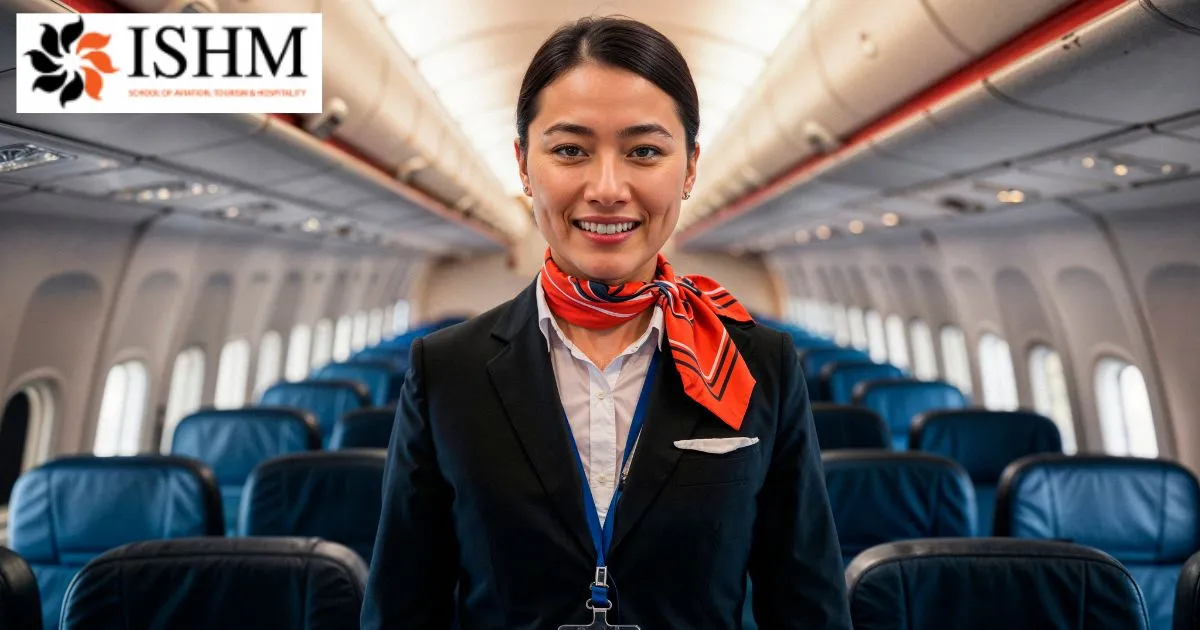
Before stepping into a professional aviation environment, cabin crew trainees must understand the aircraft environment where they will work. Professional training for cabin crews primarily covers aircraft cabin layout, passenger seating areas, emergency exits, safety equipment locations, and cabin communication systems. This kind of detailed knowledge of aircraft helps crew members take appropriate action quickly and confidently in any unexpected situation.
Live aircraft simulator training
One of the best advantages of practical aviation training at ISHM Kolkata is experiencing real-world situations before encountering them in practice. A live aircrew simulator can create a realistic cabin environment where students can practice passenger boarding, safety demonstrations, cabin announcements, emergency evacuation techniques, and proper team coordination.
ISHM’s aviation training approach primarily includes aircraft simulator lab training that provides students with a more realistic learning environment. This kind of hands-on training exposure, along with a strong academic foundation, helps students build the confidence to perform in the cabin crew profession with fearlessness.
Emergency situation handling training
Aviation professionals are primarily trained to remain calm and cool in any emergency situation. When students get practical training exposure from ISHM, they can learn several emergency situation handling techniques, such as
- Emergency evacuations
- Fire safety process
- Handling a medical emergency
- Handling safety equipment
- Passenger assistance during a stressful situation
This kind of practical training exposure helps students learn teamwork and leadership skills, which are vital for cabin crew professionals.
First aid and passenger care skills
Every flight carries passengers with different needs. Cabin crew must be prepared to support passengers with proper care and responsibility. The training for cabin crew professionals mainly includes some essential first aid and passenger care skills, such as:
- Basic first aid procedures
- Managing onboard medical situations
- Supporting elderly passengers and children
- Solving passengers’ concerns politely
The main purpose of practical cabin crew training is to equip students with real-world experience to create a safe and comfortable aircraft journey for everyone.
In-flight service training
A great flight experience becomes possible when cabin crews pay attention to the passengers’ small details and resolve problems professionally. Through practical training, cabin crew professionals can learn several in-flight service skills, such as.
- Passenger service etiquette
- Food and beverage management
- Professional cabin organization
- Professional communication with passengers
- Managing different passengers’ personalities
With the unique combination of top-notch hospitality management knowledge and aviation training skills from ISHM, students can become well-versed cabin crew professionals upon successful completion of their courses.
Conclusion
A cabin crew career actually is a journey of professional learning, self-confidence building, and continuous growth in the aviation industry. If you are dreaming of starting your career in the aviation industry, choosing the right training institution is vital for you. At ISHM, students can access classroom learning facilities alongside practical training, helping aspiring aviation professionals build successful careers in the airline and airport industries.