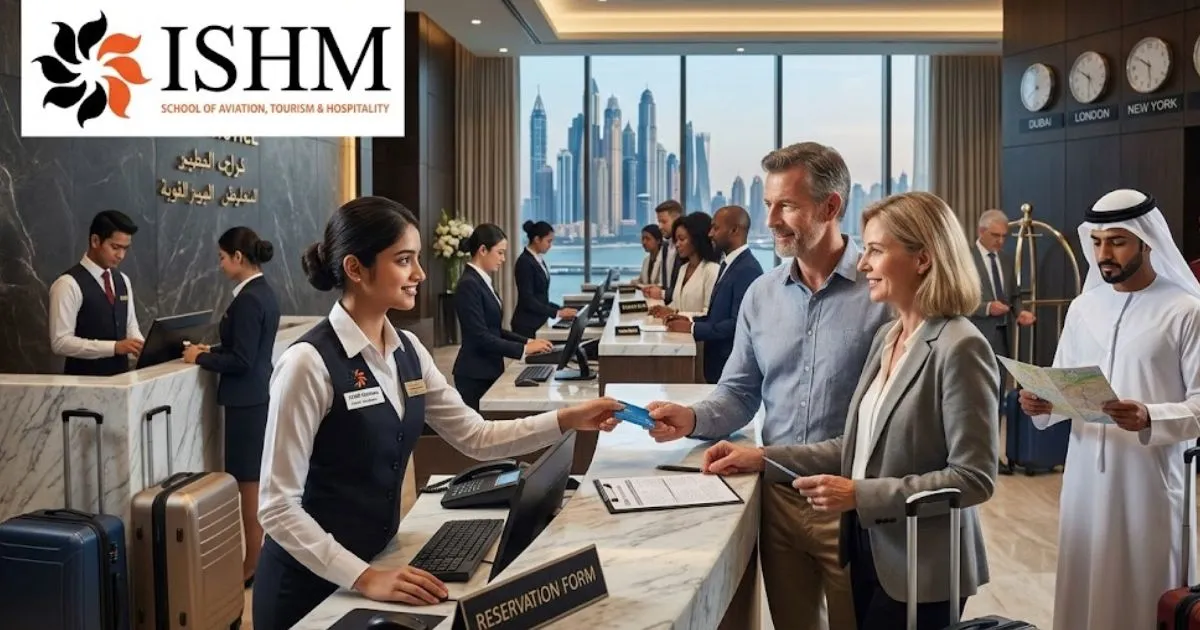
For students stepping into the hospitality world, international exposure can change how they view the industry. Many aspiring professionals studying at a hotel management institute in Kolkata quickly realize that classroom learning builds the base. Still, real confidence comes when you’re actually working in a fast-moving hotel environment abroad. This is the difference between learning from a menu and dealing with the entire process of restaurant service when there is a peak time in the restaurant with customers having different cultural backgrounds.
An internship abroad is not just a way to enhance your resume. Rather, an intern learns to adapt very fast. Gain knowledge on how things change for hotels and customers depending on the country. Today you work as an employee in a luxurious front office; tomorrow you have to deal with many check-ins which need good time management skills and communication.
Various Reasons Show the Importance of the International Internship for Hotel Management Students
It is essential that hospitality management students gain experience through international internships. This will ensure that they grow into competent professionals. Through internships, students get firsthand exposure to the demands of working within an international setting at a hotel.
Real-world exposure beyond the classroom
An international internship puts students right into the heartbeat of the hospitality industry. It’s one thing to learn front office procedures in a classroom. Still, it’s completely different when you’re actually checking in guests from different countries with tight schedules and very different expectations. Students from the hotel management institute in Kolkata often find this shift eye-opening because it shows how fast decisions need to be made in real hotel operations.
Confidence that comes from pressure
There’s something about working in a busy hotel during peak season that changes you. You stop hesitating. You start reacting. Experiencing back-to-back check-in operations, housekeeping coordination, or handling guest requests under pressure gives you the kind of coolness that cannot be taught in class because it is not mere theory but actual practice.
Improved job prospects
International exposure does not go unnoticed in the workplace; it shows you’re adaptable and disciplined. Students who complete such internships often find it easier to step into roles in luxury hotels or international chains. It’s not just an extra qualification; it often becomes a deciding factor in hiring.
Understanding global service standards
Hotels don’t run the same way everywhere. A luxury property in Dubai doesn’t operate like a boutique hotel in Europe or a resort in Southeast Asia. An international internship helps students notice these differences firsthand. Service timing, guest interaction style, and even how complaints are handled all vary. And once you’ve seen it, your idea of “good service” becomes a lot sharper and more practical.
Stronger communication skills
Hospitality is basically communication in action. You’re constantly dealing with guests, colleagues, and supervisors from different backgrounds. An international setting pushes students to adapt their tone, body language, and even problem-solving style. Over time, this makes communication more natural and less forced, especially when handling difficult situations.
Conclusion
A global internship provides an important experience that can’t be obtained solely through lectures at school, since such practice allows future hotel managers to be exposed to global hospitality firsthand. It increases one’s self-assurance, develops effective communication skills, and teaches students how hotels manage situations of crisis. The most important thing is that a clear path to a successful future career in hospitality is defined.